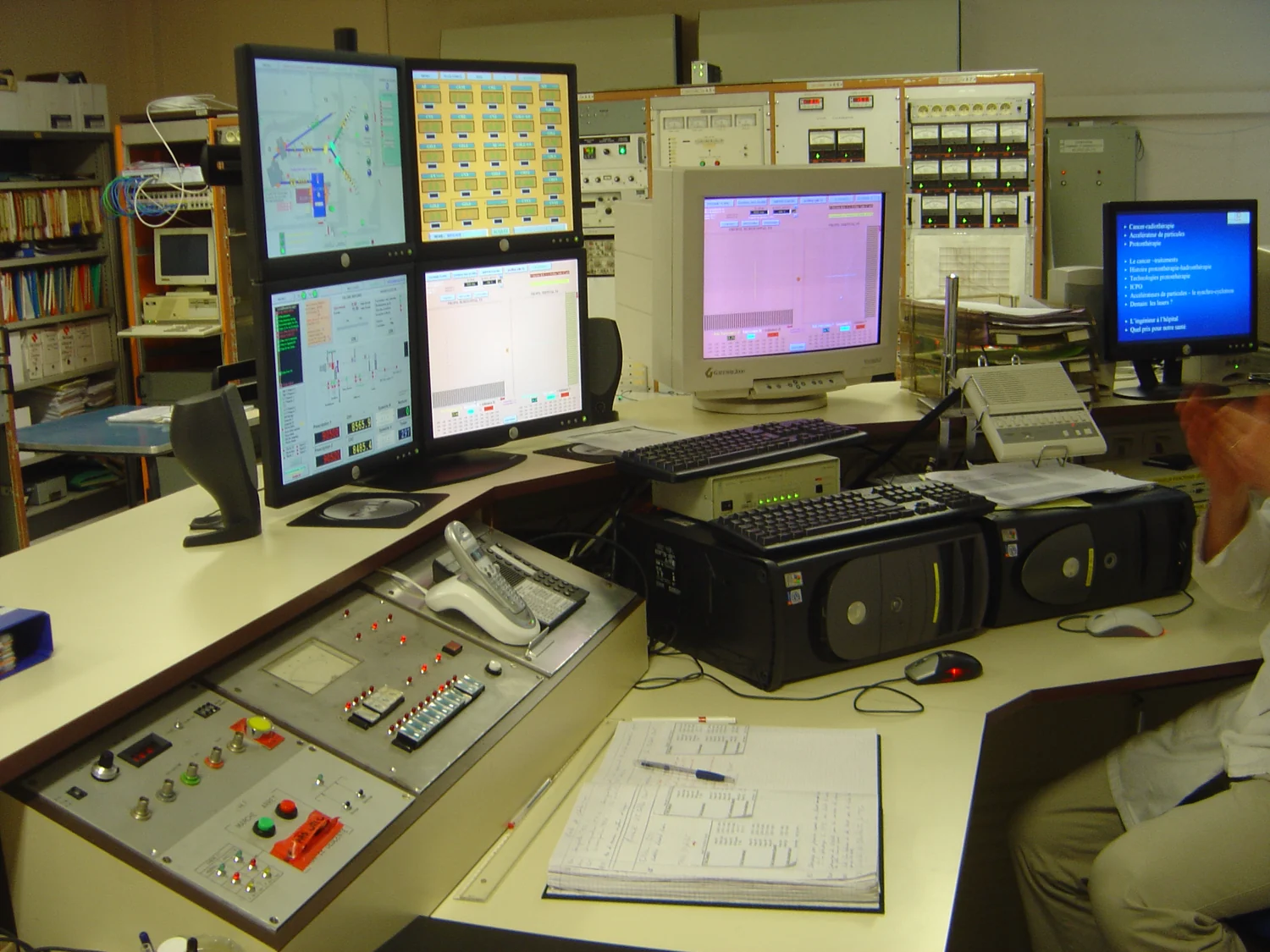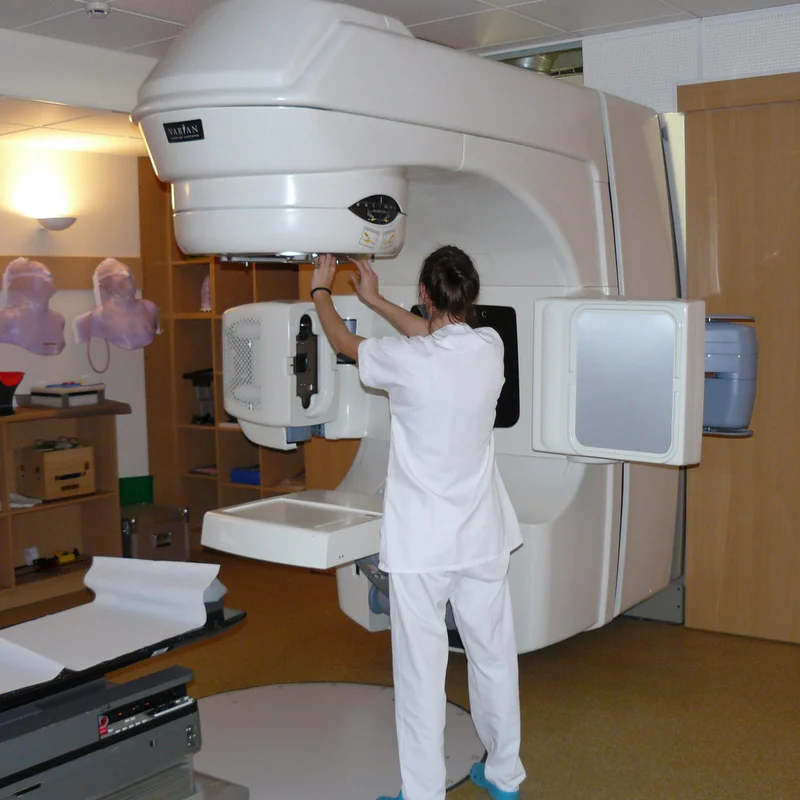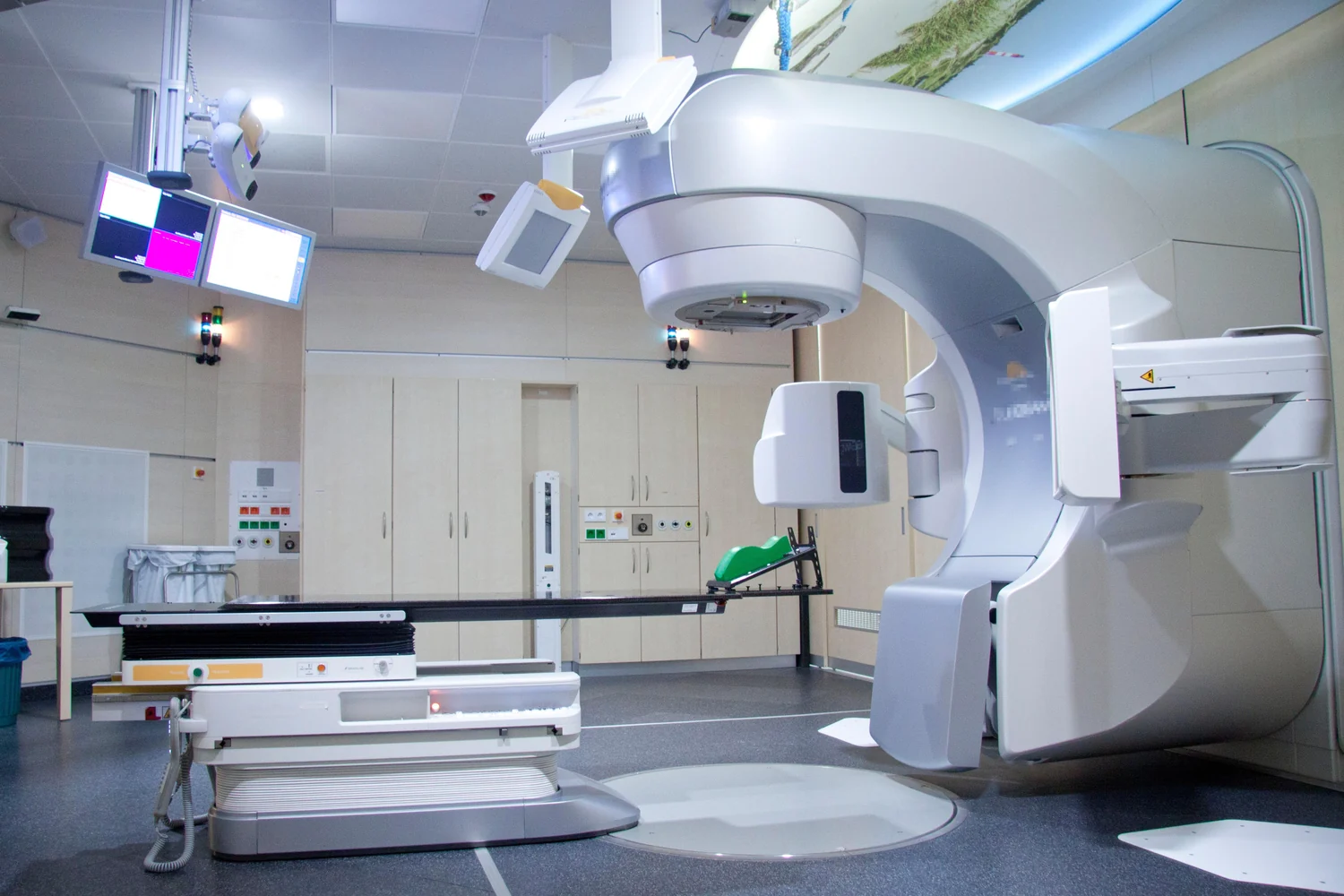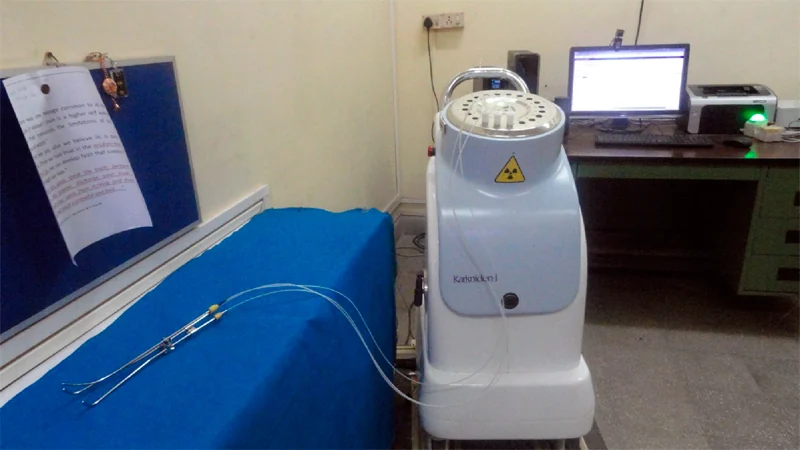
How can a radiation beam be aimed at a tumor without treating the body as if it were a flat target? The planning problem is three-dimensional: anatomy has depth, tumors have irregular edges, and beams travel through tissue. Computer models let a treatment team calculate how different beam arrangements may distribute radiation before treatment begins.
Start with anatomy and a target
In external beam radiation therapy, a machine directs radiation at a specific region of the body. Planning begins with images that help define the treatment area and the tumor’s position. A computer analyzes those images and calculates a treatment path intended to deliver the prescribed dose to the tumor while limiting exposure to nearby normal tissue [2].
A useful mental picture is shining several flashlights toward one small spot. Each flashlight illuminates some of the space it crosses, but where their beams overlap, the light adds up. Radiation planning uses a more complex version of this geometric idea: beams from different directions can contribute to the target, while each path also has an effect on tissue it passes through.
The model calculates what the eye cannot see
A computational model represents a complex system with variables and mathematical rules, then simulates what may happen under specified conditions [1]. For radiation planning, calculations account for the beam arrangement and the patient’s imaged anatomy. The result is an estimate of dose distribution: how much radiation is expected in different locations.
This is not a direct photograph of radiation inside the body. It is a prediction produced from measurements, physical principles, and the plan’s assumptions. Like other models, it is useful because it can compare many candidate arrangements consistently. It remains important to check whether the simulated anatomy and treatment setup correspond to the patient and delivery conditions.
Different beams change the planning geometry
Most radiation therapy machines use photon beams. Photons can reach deep tumors, but they scatter some radiation along their path and continue beyond the tumor into normal tissue. Proton beams also reach deep targets, but they stop at the tumor; clinicians expect they may reduce exposure to some normal tissue, and comparisons with photon treatment are an area of clinical research [2].
The difference resembles two kinds of traveling energy: one passes through and beyond a target, while another can deposit much of its energy near a stopping point. The practical dose pattern still depends on anatomy and beam arrangement. Electrons, which cannot travel far through tissue, are used for tumors at or near the surface [2].
A planned dose is part of a larger process
Treatment techniques apply the same planning logic in different ways. Three-dimensional conformal therapy shapes beams to the tumor from multiple directions. Intensity-modulated radiation therapy (IMRT) uses many smaller beams and varies their strength across regions. Image-guided radiation therapy adds imaging during sessions, allowing the team to detect changes in tumor size or position and adjust when needed [2].
The calculations help turn a clinical prescription into a deliverable plan; they do not independently decide what treatment a person should receive. Models simplify reality, and the body may move or change between planning and delivery. Imaging, positioning, and professional review connect the calculated distribution to the actual treatment session. The central task is to make the plan’s assumptions match the body as closely as possible.
Sources & further reading
- Computational Modeling NIBIB
- External Beam Radiation Therapy National Cancer Institute
Prepared for the independent PSI Center reading library. About edition dates and source checking.
This explainer describes scientific principles. It does not assess individual treatment choices.