If a radioactive sample has a half-life of one day, does it become harmless after two days? The phrase can sound like a timer attached to every atom, but it describes a statistical pattern across a population of unstable nuclei. Half-life tells us how the expected number of undecayed nuclei changes; it does not schedule the moment when the last one disappears.
Each nucleus has its own chance
A radioactive atom’s nucleus can transform by emitting radiation. For any one unstable nucleus, the exact time of decay cannot generally be predicted; the process is described probabilistically. A half-life is the interval over which, on average, half of a large group of those nuclei will have decayed.
Imagine a huge collection of identical coins, each with a small chance of landing heads in a trial. The fraction remaining after each round tends to shrink, but individual coins do not follow a visible countdown. Radioactive decay has a characteristic probability per unit time, so a larger initial sample contains more nuclei expected to decay in a given interval.
Halves make a curve, not a deadline
After one half-life, about half the original radioactive nuclei remain on average. After two, about half of that half remains: one quarter of the starting amount. After three, one eighth remains. The sequence continues by repeated multiplication by one-half, approaching zero without reaching a precise endpoint in the mathematical model.
A small sample makes the randomness more noticeable. If only a few nuclei remain, one may decay soon while another persists much longer; the smooth halving curve describes the expected behavior of many nuclei, not the exact fate of a tiny handful. Thus “half-life” is not a promise that exactly half will vanish at the same instant.
Activity and amount are related but distinct
Activity is the rate of radioactive decays in a sample. If the number of undecayed nuclei declines, the expected number of decays per unit time declines too. The sample’s activity therefore falls along with the parent radionuclide, even though the material does not abruptly switch off after a fixed number of half-lives.
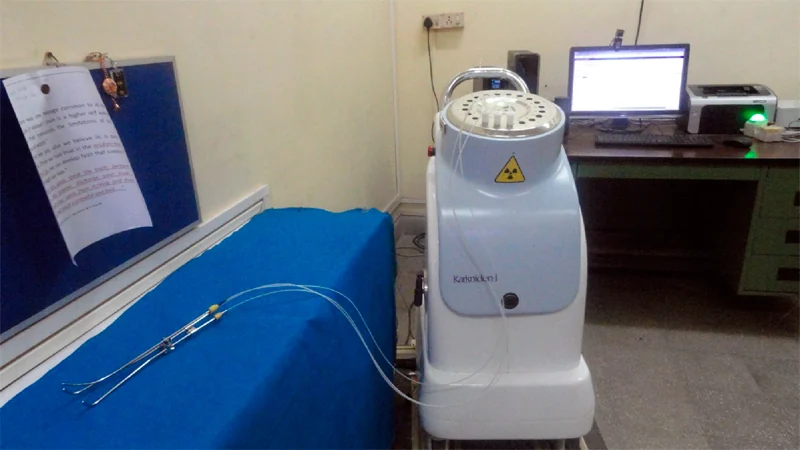
Radioactive tracers exploit nuclear emissions in medical imaging: cameras detect radiation from molecules that have entered the body, allowing clinicians to track their distribution [1]. Different radionuclides have different decay rates, which matters for how their signals change over time. The word “radiation” covers forms with different energies and effects; ionizing radiation such as gamma rays can damage DNA, while visible light is non-ionizing [2].
What several half-lives can and cannot tell us
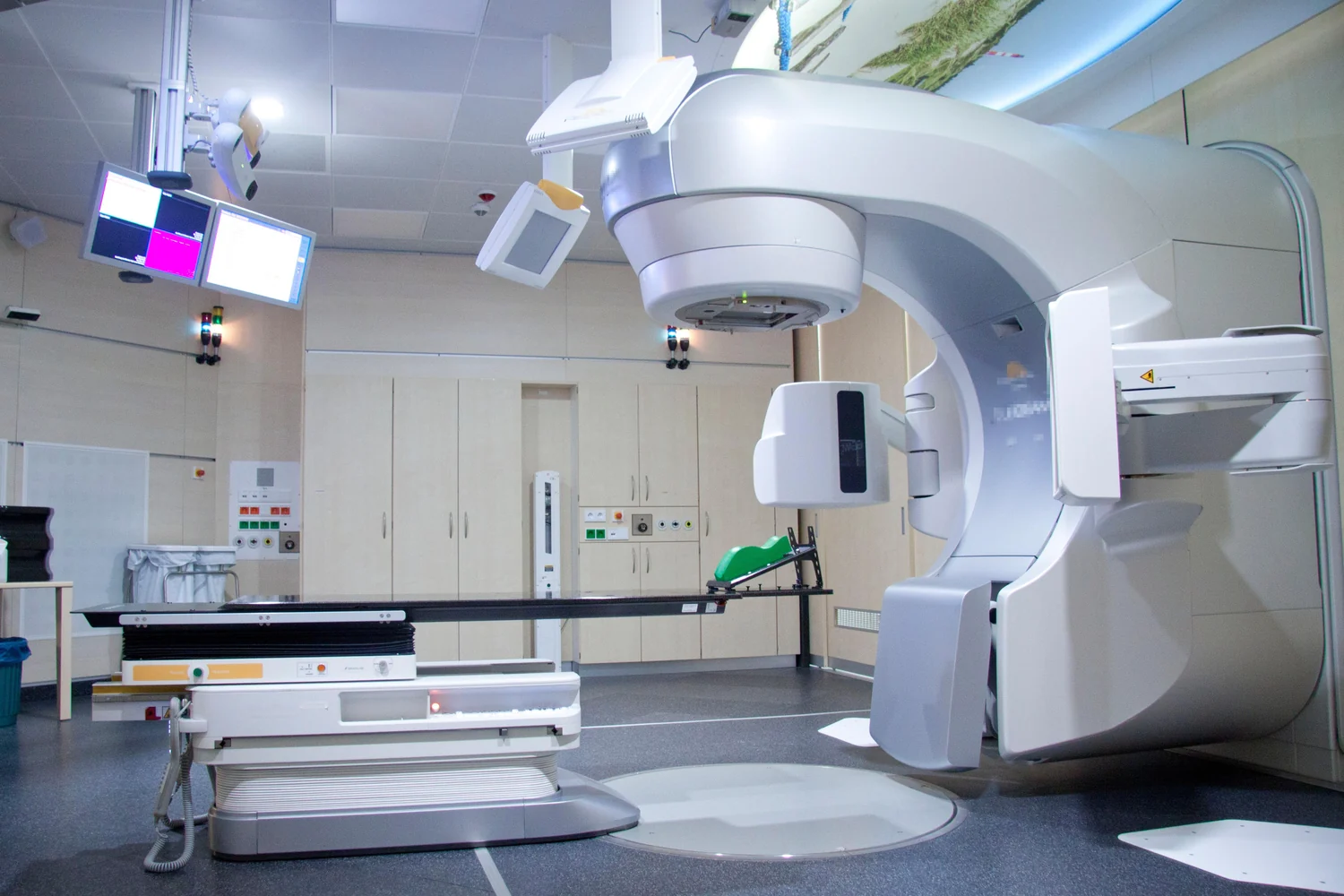
Several half-lives can reduce the expected amount substantially, but the number alone does not determine a material’s full hazard or clinical meaning. The type of radiation, its energy, where the radioactive material is, and how much reaches tissue also matter. In medicine, a tracer’s emissions are used to obtain information, while radiation therapy deliberately uses radiation to damage targeted cells [1].
The distinction between a statistical decay pattern and a personal risk is essential. Medical procedures that involve ionizing radiation can carry a small risk, but the National Cancer Institute notes that the benefit of medically indicated procedures is almost always greater than the risk [2]. A half-life is a physical property of a radionuclide, not a universal safety threshold or a countdown to zero.
Sources & further reading
- Nuclear Medicine NIBIB
- Radiation National Cancer Institute
Prepared for the independent PSI Center reading library. About edition dates and source checking.
This explainer describes scientific principles. It does not assess individual treatment choices.