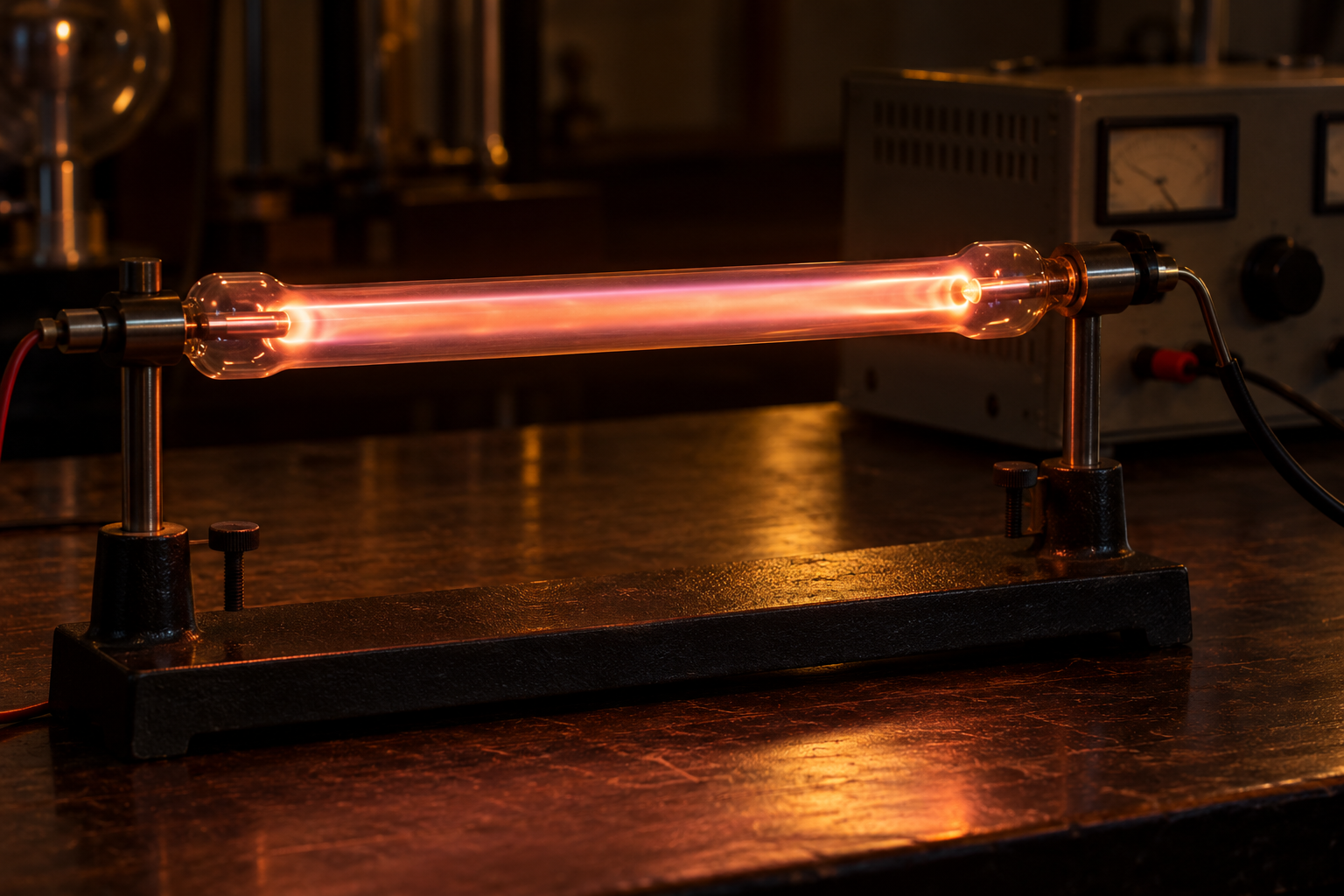
How does a physical effect become better health? A device may send an electrical pulse, detect a sound, or measure a changing signal, but those actions are only the beginning of a longer chain. The technology must interact with the body in a useful way, produce information or an effect that can be interpreted, and lead to an outcome that matters. Following each link makes the promise more concrete and shows where evidence is needed.
Begin with an interaction
Medical devices interact with the body to monitor, modulate, or supplement bodily functions and structures. They can be implanted, such as pacemakers, or worn externally, such as sensors [1]. The first question is physical: what crosses the boundary between device and body? An electrode may deliver an electrical pulse; a sensor may detect a signal; a prosthesis may support movement. Naming that interaction makes the mechanism easier to examine.
Consider a pacemaker. Its electrodes deliver electrical pulses to help regulate heartbeat and rhythm [1]. The causal chain begins with an electrical signal acting on heart tissue. That is a defined physical action, but to understand the health claim, one must also ask how the device is selected, implanted, monitored, and evaluated. The mechanism explains what the device is designed to do; evidence determines how well it achieves the intended clinical purpose.
Turn a bodily event into information
Some devices do not directly change bodily function; they measure it. A wearable sensor can detect a quantity such as glucose and transmit information to another device or a clinician. A continuous glucose monitor paired with an insulin pump illustrates a system in which sensing feeds a treatment response [1]. The sensor’s reading is converted to a signal; the receiving system interprets it; then a pump adjusts delivery. Each step depends on the quality and timing of the previous one.
This is why “smart” does not identify a single capability. A sensor can be accurate at measuring one signal but still fail to classify a condition or guide a useful decision. Monitoring, diagnosis, and treatment are different functions. For a digital system, ask what is measured, how the result is interpreted, and what action follows.
Clinical evidence tests the chain in people
A laboratory demonstration can show that a device produces an expected physical effect. It cannot alone show that patients benefit. Clinical trials are studies in people that test how well medical approaches work, and they are designed for distinct questions, including treatment, prevention, screening, and supportive care [2]. Evidence should match the claim: a treatment claim needs patient outcomes, while a monitoring claim needs reliable measurement in the intended use.
Imagine a new sensor that detects a pattern associated with a disease. First, researchers must establish that the signal is measured reliably. Next, they must test whether the pattern identifies the relevant condition in the intended population. Finally, if the claim is improved health, evidence must show that acting on the information changes outcomes. A success at an early link does not prove success at the end.
Follow the path to a meaningful outcome
A useful way to read a device description is to trace the path from physical interaction to patient outcome: what the device emits or detects, what happens in tissue, how information is processed, and what care decision follows. Medical devices can monitor, modulate, or supplement bodily functions [1], but those broad categories do not tell you which outcome has been demonstrated.
Clinical trials build evidence for specific approaches and populations; their findings should be read in light of the question they were designed to answer [2]. A device may have a clear mechanism and a working prototype while still needing evidence about safety, effectiveness, or practical use. Following the full chain keeps the physics connected to the patient, while preventing a plausible explanation from being mistaken for proof of better health.
Sources & further reading
- Medical Device Technologies NIBIB
- Clinical Trials: What Are the Phases? National Cancer Institute
Prepared for the independent PSI Center reading library. About edition dates and source checking.
This explainer describes scientific principles. It does not assess individual treatment choices.