How can a molecule cross a membrane when no pump is pushing it? At small scales, molecules are always in motion, colliding and changing direction. If more of a substance is on one side than another, those random steps are more likely to carry molecules away from the crowded region than back toward it. The result is a net flow called diffusion.
Random steps create a directional average
Picture a room with a drop of food coloring in one corner. Individual dye molecules move unpredictably as they collide with water molecules. No molecule is following a plan to spread across the room. Yet over time the color becomes less concentrated near the drop and more evenly distributed, because random motion creates many more opportunities for molecules to leave the crowded region than to enter it from the dilute surroundings.
Concentration means the amount of a substance in a given volume. When concentration differs across a region, diffusion produces net movement down that gradient, from higher concentration toward lower concentration. The underlying motion remains random; the direction describes the average result across vast numbers of molecules. This distinction explains why diffusion does not need a motor or a pressure source, but it does need molecular motion and a difference in concentration.
Membranes can select what crosses
A membrane adds a boundary to the story. Some molecules may pass through its material or through openings in it, while others are blocked or cross slowly. The outcome depends on properties such as molecule size, membrane structure, and chemical interactions. So diffusion across a membrane is not simply a substance flowing through an open doorway; it is random motion filtered by the boundary.
In hemodialysis, blood runs inside many thin hollow fibers in a dialyzer, while dialysis solution flows along the outside in the opposite direction. Waste products move from the blood into the solution across the fiber walls, while filtered blood stays within the fibers and returns to the body [1]. The machine pumps the blood and solution through the device, but those pumps do not pull each waste molecule across the membrane. The concentration difference supplies the direction for molecular exchange.
A gradient can be maintained by flow
Why does exchange continue instead of stopping as soon as the two sides become similar? The flowing dialysis solution continually brings in fluid with a different composition, while blood carries more substances toward the filter. That circulation helps preserve a concentration difference along the fibers. If the two sides reached equal concentrations and nothing changed, diffusion would still occur in both directions, but there would be no net movement of that substance.
This is a useful contrast: diffusion describes molecular movement down a concentration difference, while bulk flow transports many molecules together. A pump can create bulk flow, and that flow can maintain conditions that allow diffusion to keep working. In the dialyzer, the machine controls the movement of blood and solution; the filter’s role is to permit selected exchanges between them [1].
Distance and material shape the pace
Diffusion works most readily over short distances. Imagine a scent released in a small sealed box versus one released at the far end of a long corridor. Molecules in both situations move randomly, but reaching a distant region takes longer when the path is longer. In tissues, a molecule’s route and the availability of paths through a material affect how quickly it can spread.
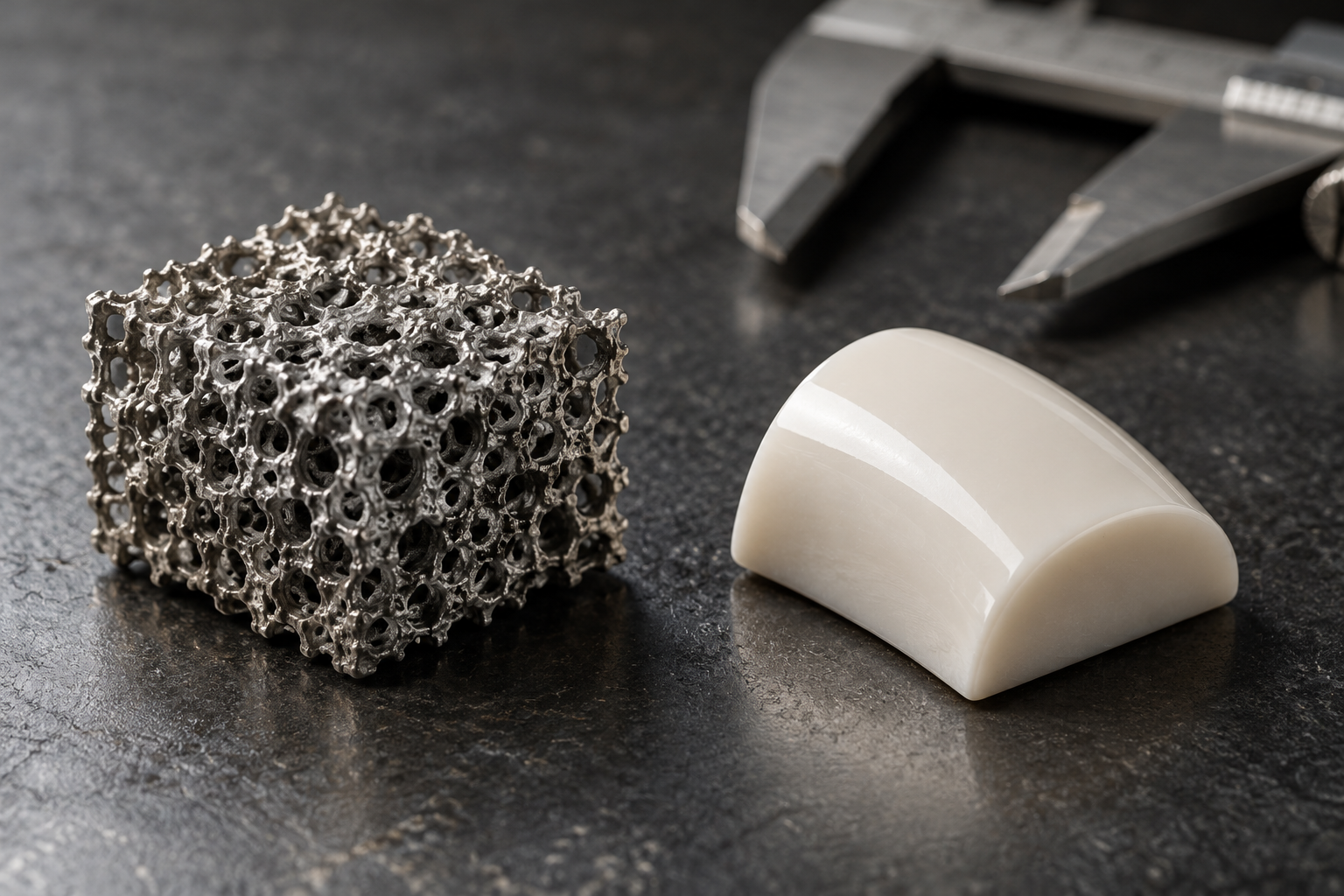
Biomaterials can be designed as films, fibers, foams, coatings, and other structures, and those forms help determine how substances move through or around them [2]. For example, a material used to carry a therapeutic may help protect it before it reaches a target, while its structure and breakdown behavior affect release. Diffusion can explain how molecules spread from such materials, but it cannot by itself show that a delivery system works clinically. Geometry, chemistry, fluid movement, and biological response all shape the real result.
Sources & further reading
- Hemodialysis NIDDK
- Biomaterial Technologies NIBIB
Prepared for the independent PSI Center reading library. About edition dates and source checking.
This explainer describes scientific principles. It does not assess individual treatment choices.