Why might a glucose sensor under the skin show a change later than a blood sample? The short answer is that the two measurements come from different places. Continuous glucose monitors estimate glucose in interstitial fluid, the thin fluid surrounding cells, rather than sampling blood directly. Blood and tissue exchange glucose, but movement between compartments takes time, so a rapidly changing level need not appear everywhere at once.
Two compartments, one moving molecule
Blood carries glucose through vessels; interstitial fluid bathes cells outside those vessels. Glucose can move from blood into surrounding tissue, where cells take it up. This exchange connects the compartments, which is why interstitial measurements can estimate blood glucose, but it does not make the fluids identical at every instant. NIDDK explains that CGM sensors estimate glucose in fluid between cells, which is very similar to the blood level. [1]
Picture pouring water into one end of a long, narrow sponge. The wetness near the pour point changes before the far end does. The analogy is imperfect because tissue is living and glucose is transported and consumed, but it makes the delay intuitive: a signal must propagate through a physical system. If blood glucose is changing slowly, the two readings can track closely; during a fast rise or fall, the time needed for exchange and sensing becomes more noticeable.
What the sensor actually detects
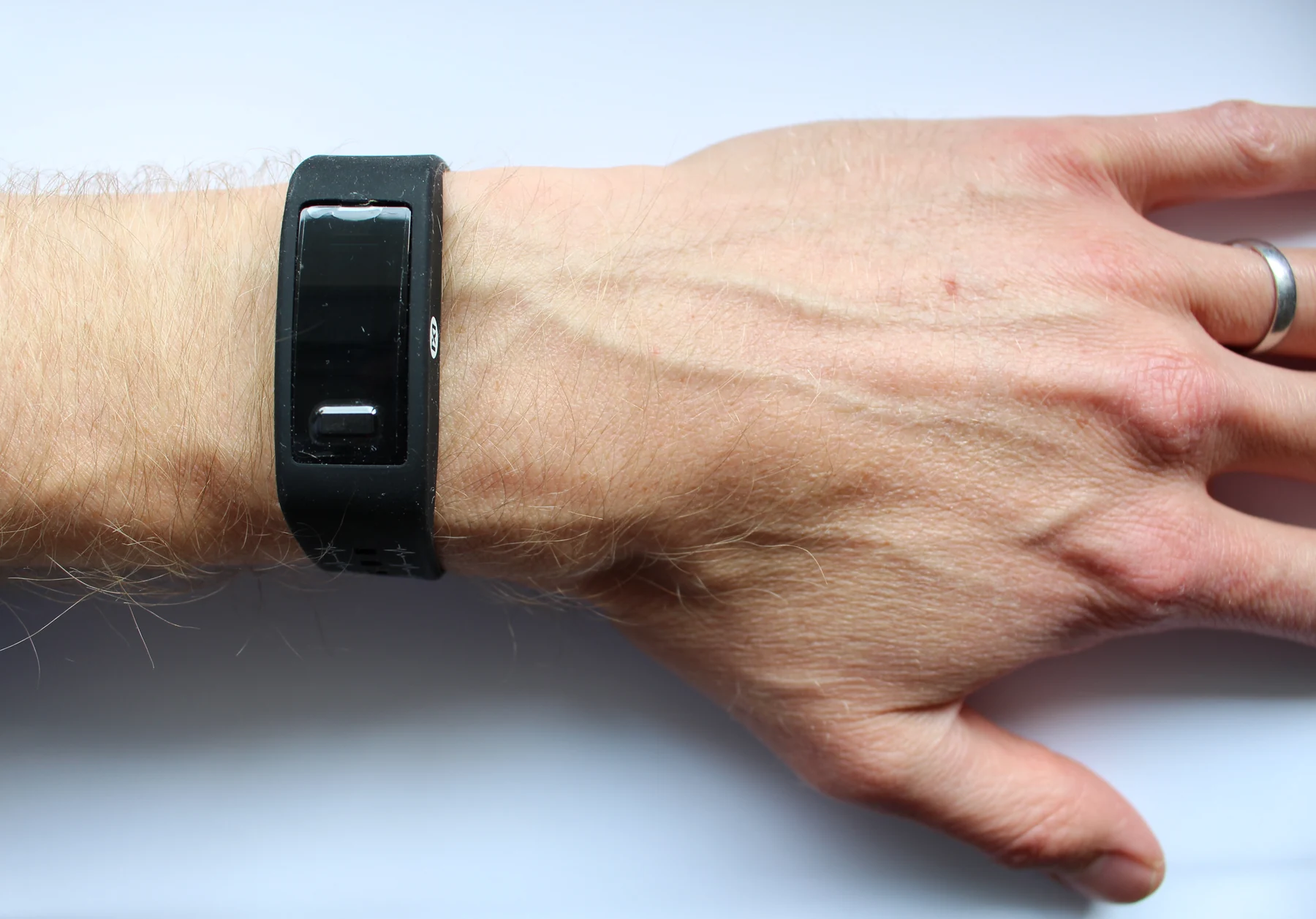
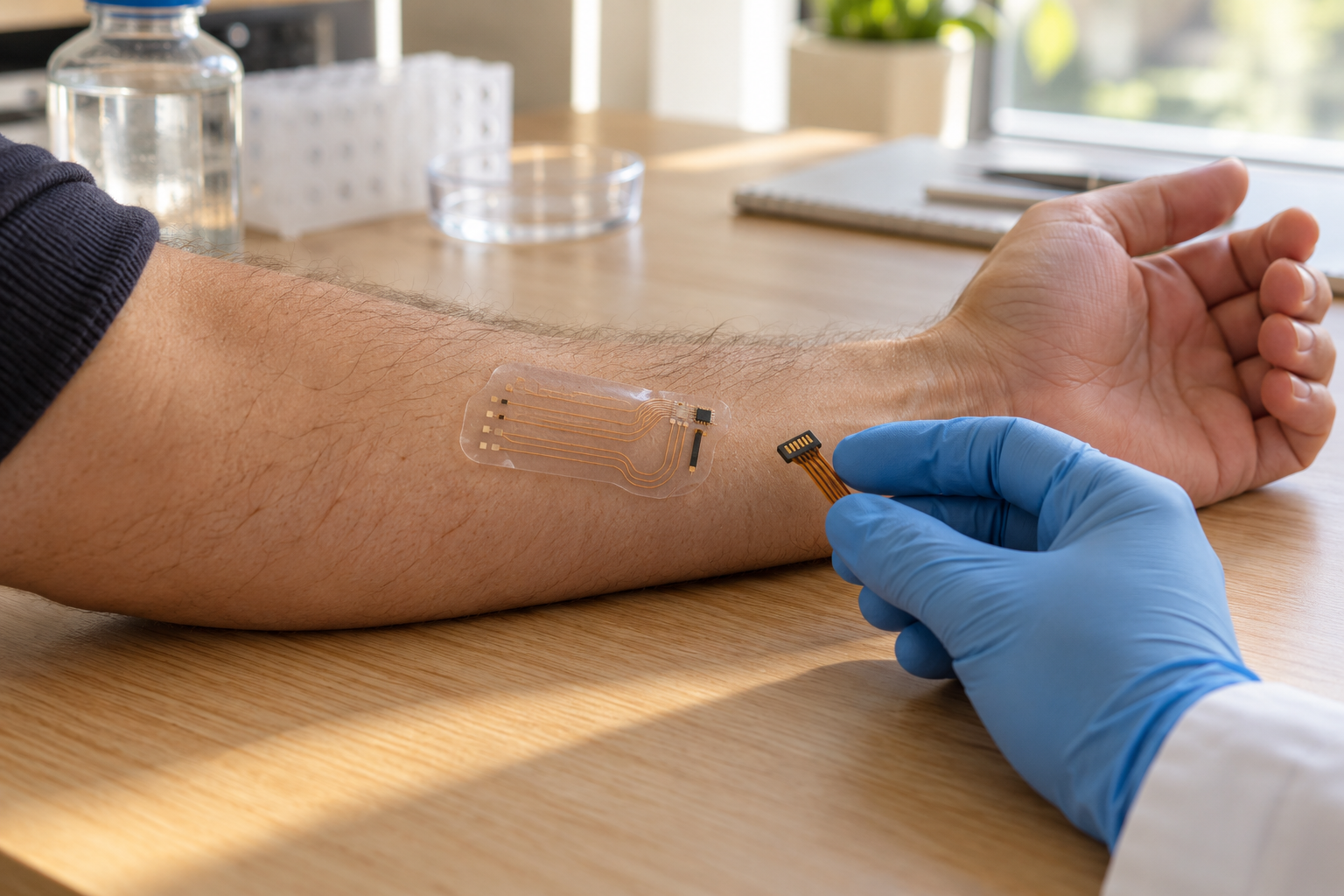
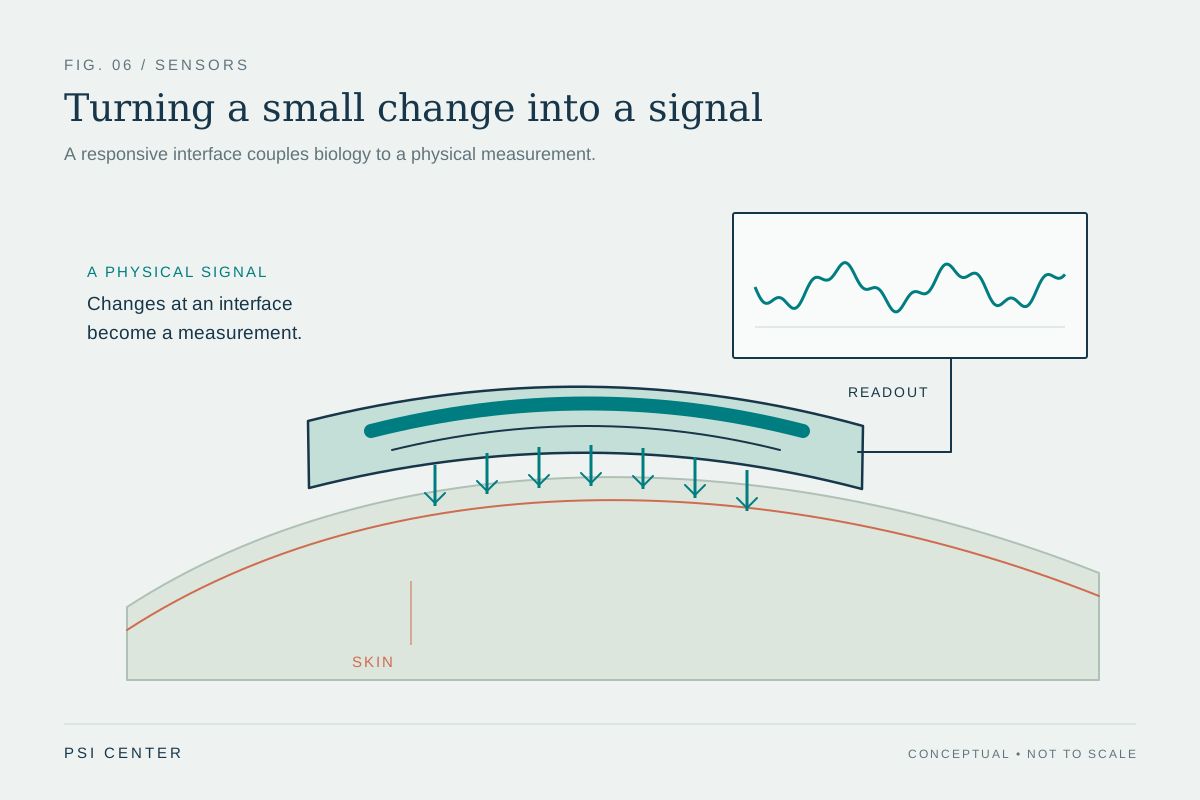
A typical CGM has a small sensor placed under the skin, a transmitter, and software on a phone, pump, or receiver. The sensor contains enzymes that detect glucose in the interstitial fluid; its signal is converted into an estimated glucose value. The device can take estimates every few minutes and show a time series, not just a single measurement. That sequence is useful because direction and rate of change may carry information that one isolated number cannot. [1] [2]
The sensor therefore does not peer into a blood vessel and count glucose molecules in a fresh blood sample. It reads a local chemical signal, then the system interprets that signal as an estimate of blood glucose. As with any measurement, the displayed value depends on both the thing being measured and the way the instrument senses it. This distinction is a general lesson from biomedical sensors: the measured signal may be a proxy closely related to the quantity people care about, rather than the quantity itself. [2]
Why timing matters most during change
Suppose glucose rises after a meal. Blood arriving through the circulation changes, while glucose in tissue fluid follows as exchange occurs. A sensor needs time to register the local change and the device may also process the signal. During a quick change, a current sensor estimate can therefore reflect a moment slightly earlier than the current blood state. When levels are steadier, the lag is less conspicuous because there is less difference between the recent past and the present.
A graph helps reveal this distinction. If a line slopes upward, the number at the right edge represents an estimate from the sensor’s sampling pathway; the slope offers context about what is happening over time. A finger-stick meter, by contrast, measures glucose in a blood drop at that moment. Neither format is a magical view of every compartment at once: each has a sampling location, an instrument response, and a time point. [1]
A useful estimate is still an estimate
CGMs can provide continuous patterns, alarms, and trends, and may reduce the need for frequent finger sticks. Some systems may still require comparison with a standard blood glucose meter in particular circumstances, such as when a reading seems doubtful or an alert occurs. The key idea is not that the sensor is inherently unreliable; rather, knowing what it measures helps interpret why the number and a blood measurement can differ, especially while glucose is moving quickly. [1]
This timing issue also shows why a wearable sensor’s output is not simply a direct diagnosis. A device translates an interaction with the body into data through a chain of sensing and interpretation. NIBIB describes medical devices broadly as technologies that monitor, modulate, or supplement bodily functions; the sensor is one part of that larger system. Understanding the measured compartment makes the output more meaningful without confusing a tissue-fluid estimate with a direct blood sample. [2]
Explore the physics: an explanatory diagram
Sources & further reading
Prepared for the independent PSI Center reading library. About edition dates and source checking.
This explainer describes scientific principles. It does not assess individual treatment choices.